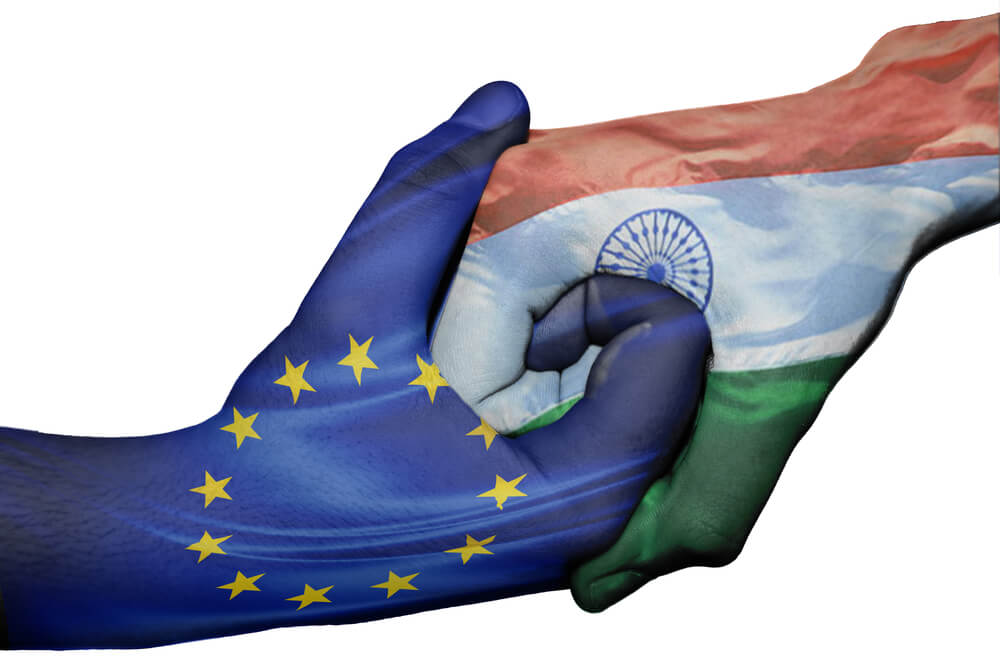
 In a major economic and strategic leverage gained by India amidst theglobal trade turbulence, the European apparel brands are aiming to make a tectonic shift towards India, as they deem the country as a potential destination. The top apparel brands from the United Kingdom and other European Union regions have anchored negotiations with Indian companies to source supplies from India. This overarching strategic decision comes as Bangladesh has slipped from being the global apparel or textile destination. Following the change of regime in Dhaka and the takeover of the interim administration, Bangladesh has been hit by severe supply chain shocks and other economic crises.
Global apparel brands cannot rely on Bangladesh as a credible and resilient sourcing destination due to significant supply chain disruptions. In fact, under the interim government, many of the textile factories in Bangladesh have been shut down. European companies are considering investing in Bangladesh’s textile industry as riskier due to political uncertainty and instability. At this critical juncture, global apparel brands from the UK and the European Union are shifting production to India as a reliable hub. Brands such as Marks & Spencer, Primark & Next have begun negotiations with the Indian suppliers. Buyers are increasingly conducting factory audits and other supplier evaluations in major manufacturing hubs in India, including Tirupur in Tamil Nadu.
According to the Tiruppur Exporters Association, brands including Marks & Spencer, C&A, Primark, Mothercare, Next, and Duns have begun visiting the region to conduct technical audits, assess new factories, and explore scaling up orders with existing suppliers. Exporters also asserted that brands already sourcing from India are actively seeking to increase their procurement volumes. This marks a pivotal strategic and economic benchmark for India amid global trade turbulence and uncertainties triggered by the Trump administration’s tariff war. Increased export opportunities position India to strengthen its economic resilience amid geopolitical and geo-economic upheavals.
In 2024-25, the European Union comprised 19.6 per cent of India’s total apparel and textile exports. The United Kingdom alone was the fifth-largest destination for Indian exports, accounting for 5.4 per cent of total exports.
India-EU FTA reaches a conclusion
The decision by European apparel brands to shift to Indian suppliers comes amid a crucial juncture, when India and the European Union are set to ink the Free Trade Agreement (FTA) on January 27. This is said to be the largest ever trade deal inked by the European Union in terms of size and scope. The FTA will further facilitate the supply of goods from India to European apparel brands by reducing duties and other trade barriers.
The FTA with the European Union will also provide India with faster, easier access toone of the world’s largest markets. New Delhi and Brussels have agreed to significantly reduce tariff and non-tariff barriers and to expand trade opportunities. This FTA will be a major shock absorber for both economies seeking to recover from the tariff dispute triggered by the Trump administration. With the FTA, the EU will emerge as India’s pivotal export destination and a strategic platform to protect Indian exporters and MSMEs facing challenges due to the United States’ conservative policies.
However, the India-EU FTA has specifically excluded agriculture from the negotiations, and the deal will be sealed on January 27 without any concrete agreement on the agricultural sector. New Delhi aims not to reduce the tariffs andother restrictions imposed to bar access to the Indian agricultural market. This is to protect farmers who depend on the agricultural sector and allied activities. Currently, more than 40 per cent of the Indian workforce relies on agriculture for their livelihoods. Unhindered access to the sector will disrupt the lives of these farmers. Thus, India aims to protect the agricultural sector and the people who depend on it.
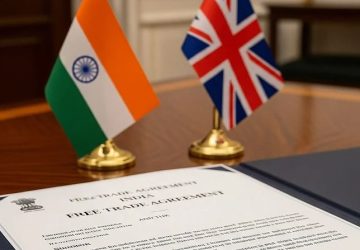
Recently, India and the UK signed an FTA, and as a result, 99 per cent of India’s exports to the United Kingdom have duty-free access. In this direction, the spike in apparel exports from India to the UK and other parts of Europe will be easier and hassle-free. Thus, triggered by the turmoil in Bangladesh and coupled with FTAs with the United Kingdom and the European Union, India has gained significant strategic leverage to sustain its economic growth momentum.
Under the India-EU FTA, New Delhi could gain 100 billion or more annually. Currently, the India-EU trade is on an upward trajectory both with individual countries and collectively. The FTA and the emergence of India as a potential export destination in apparel and other products are the biggest strategic gains and will further embolden the domestic economy and also emerge as an attractive export and business destination.