Mosquitoes may be tiny, but they are far more dangerous than large predators. According to estimates, they are responsible for up to around one million deaths per year. Malaria alone, transmitted by these blood-sucking insects, caused approximately 597,000 deaths among around 263 million cases in 2023.
To protect people from mosquito bites, the World Health Organization (WHO) primarily recommends LLINs (Long-Lasting Insecticidal Nets). These long-lasting insecticide-treated mosquito nets are easy to use, highly effective, and inexpensive to manufacture. They can be produced on KARL MAYER warp knitting machines with outstanding efficiency and quality.
Mechanical and Chemical Protection
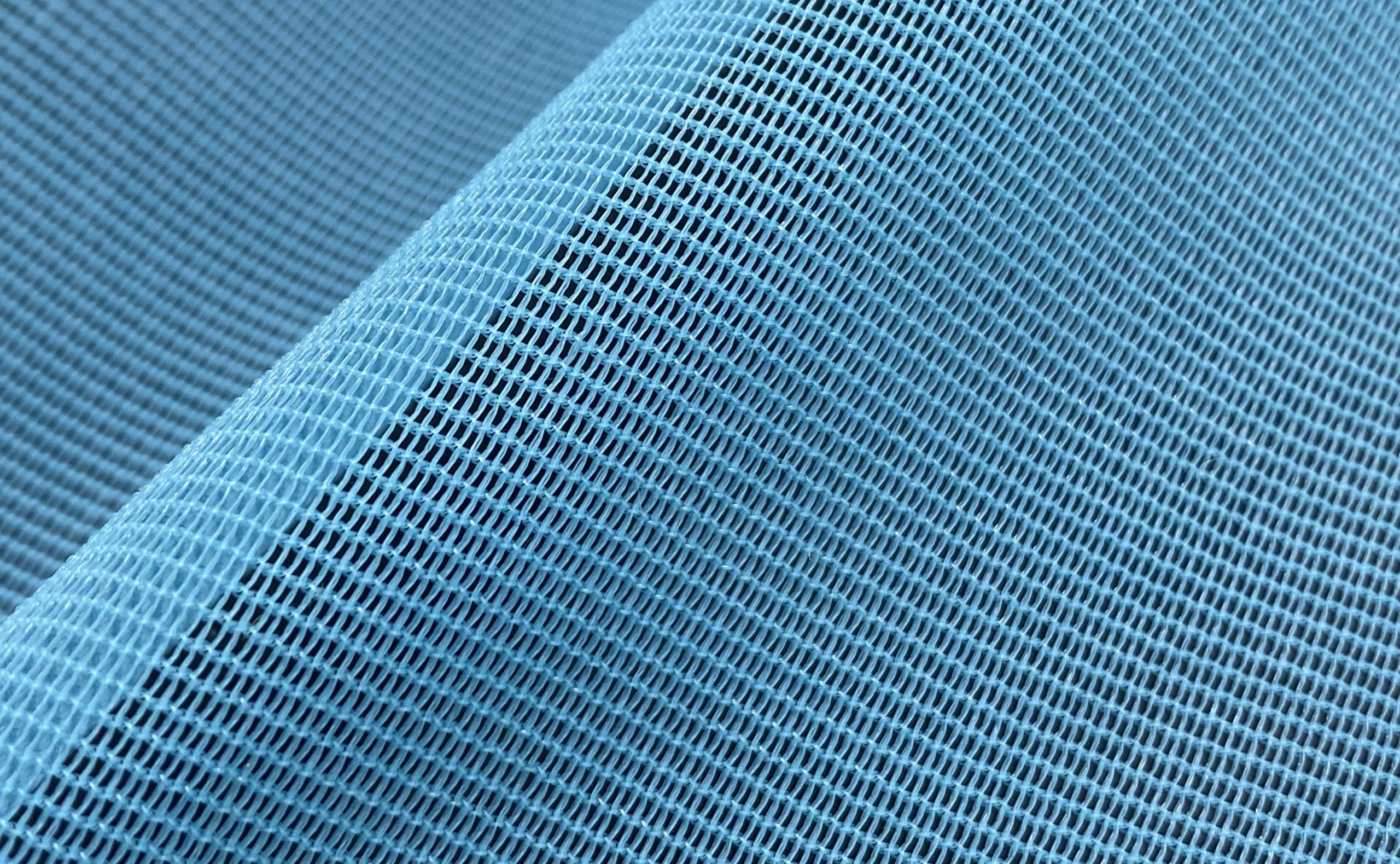
Mosquito nets are designed to serve both as a physical barrier and as a means of killing or repelling mosquitoes. At the same time, they must allow sufficient air circulation.
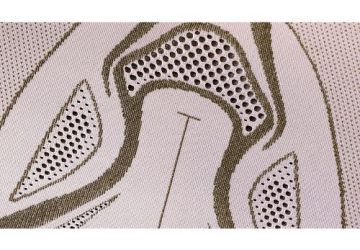
Standard mosquito nets made of PES multifilament meet this requirement through defined stitch densities – that is, the number of mesh openings per unit area. This ensures mechanical protection. In addition, the mesh textiles must provide defined strength characteristics to ensure that mosquitoes cannot find any openings. The WHO recommends a bursting strength of at least 505 kPa for multifilament yarns with a count of 100 denier and 220 kPa for 75 denier yarns. /1/
The nets also provide chemical protection through treatment with contact insecticides.
Manufacturing with Maximum Precision
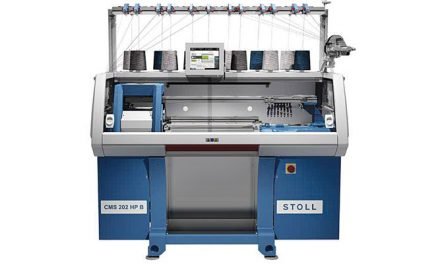
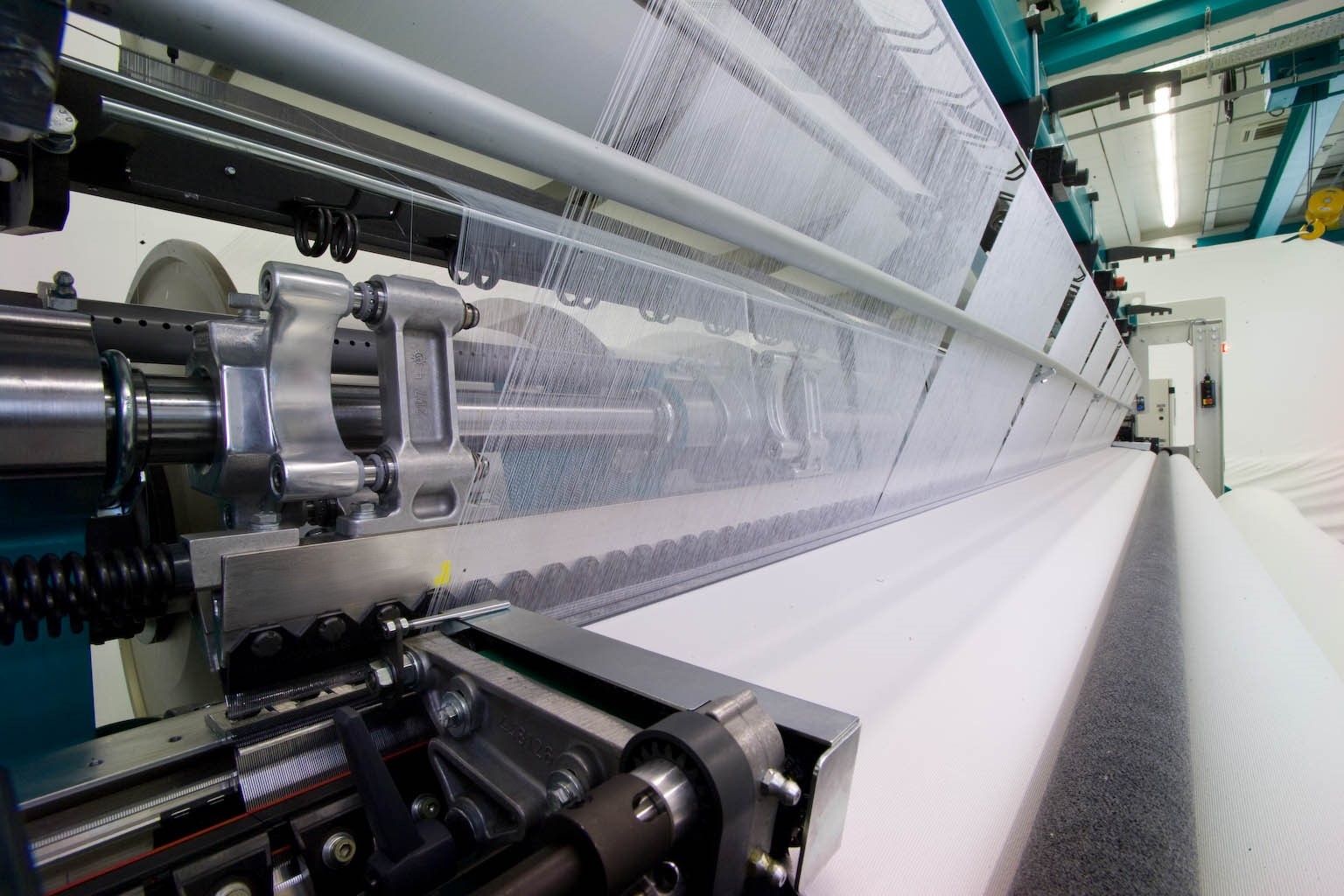
Warp knitted mosquito nets are predominantly produced on two-bar tricot machines, namely the TM 2 and HKS 2-M from KARL MAYER. When PES filament yarns are used, machine gauges of E28 or E32 are typically employed. For processing polyethylene (HDPE) monofilament yarns, E14 is the standard gauge, although slight deviations above or below this value are also common.
The two yarn materials differ in terms of construction, properties, and insecticide application. While PES fabrics are impregnated with the insecticidal agent during the finishing process, the agent is already incorporated into the HDPE granulate before filament production.
On the TM 2 and HKS 2-M, these yarns are transformed into mosquito nets with exceptional productivity and premium quality. Thanks to their outstanding precision, the machines meet the strict requirements regarding dimensional stability, uniformity of mesh openings, tear resistance, and fabric weight.
This precision is essential, as deviations from the specified net structure can ultimately put human lives at risk.
In addition to two-bar tricot machines, three-bar machines in gauge E18 are also used for certain protective applications involving multifilament yarns.
Mosquito Nets: Products with Enormous Market Potential
The global market potential for mosquito nets is enormous. In Africa alone, hundreds of millions of long-lasting insecticidal nets are distributed regularly and typically need to be replaced every three to five years. This creates recurring replacement demand.
Further growth is driven by the fact that mosquito nets are not only an essential healthcare product for billions of people but are increasingly becoming consumer and outdoor products as well. According to Market Intelo, the global mosquito net market was valued at USD 3.2 billion in 2025. By 2034, the market is expected to reach USD 5.1 billion, representing a compound annual growth rate (CAGR) of 5.8%. /2/
References
/1/ Specifications for Netting Materials, Roll Back Malaria Cabinet Project, WHO, 2001.
/2/ Mosquito Net Market Research Report 2034