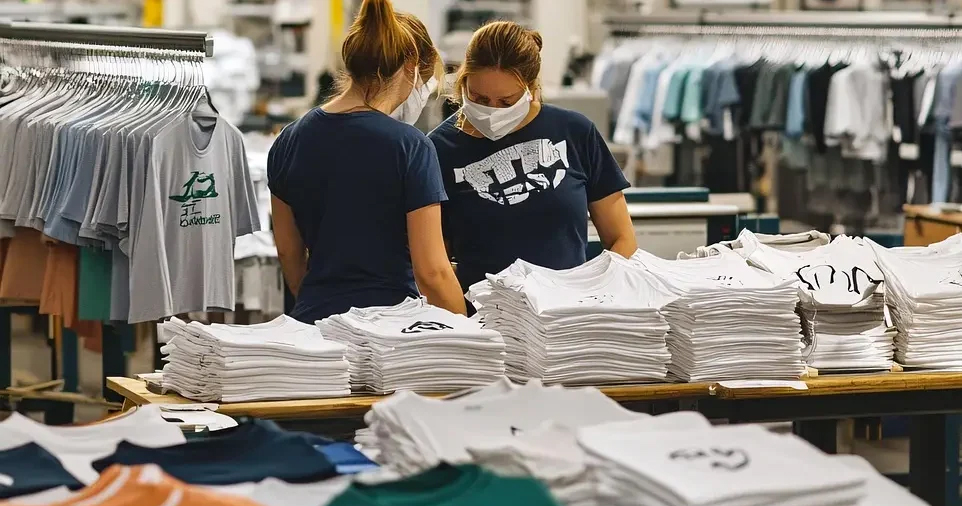
The worldwide apparel sector has experienced a profound transformation during the last twenty years, with knitted and woven clothing items jointly comprising close to 60% of global textile exports in 2025, as reported in the August 2026 edition of The Textiles Observer, a complimentary publication issued by the International Cotton Advisory Committee (ICAC).
Global textile export values climbed from roughly $560 billion in 2006 to $914 billion in 2025. Exports of knitted garments nearly doubled across that span, moving from $145.2 billion to $289.1 billion, while exports of woven garments advanced from $158.5 billion to $257.7 billion.
Yet the most consequential development has not merely been the growth in trade volume. Rather, it has been a fundamental reordering of competitive advantage across nations.
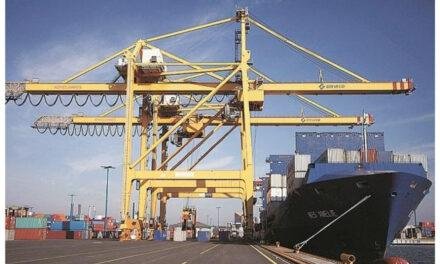
China continues to hold its position as the foremost exporter of textiles and apparel worldwide, but Bangladesh and Vietnam have risen to become significant players on the global stage. Bangladesh advanced from the 14th largest textile exporter in 2006 to second place in 2025, while Vietnam moved up from 21st to third. Combined with China, these three nations represented approximately 44% of global textile exports in 2025.
Simultaneously, demand patterns have become increasingly scattered across geographies. The United States remains the leading textile importer globally, yet its proportion of worldwide imports contracted from 18.9% in 2006 to 13.7% in 2025. A broader array of markets throughout Europe and Asia have grown in significance, resulting in an increasingly multipolar global textile trading environment.
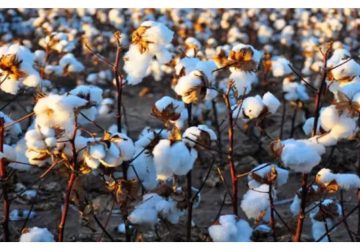
Cotton still holds sway in several of the largest individual apparel product categories worldwide, including cotton t-shirts, cotton jerseys, and men’s and women’s cotton trousers and shorts. However, alternative fibers are expanding at a faster pace across numerous uses. Cotton accounted for roughly 68.3% of global fiber demand in 1960, versus 21.1% in 2025. During that same timeframe, synthetic fibers boosted their portion from 4.6% to 71.7%.
This transition is also evident within garment trade flows. Exports of knitted garments made from cotton rose from approximately $69.9 billion in 2006 to $128.3 billion in 2025, but their share slipped from 48.3% to 44.5%. Knitted garments made from man-made and synthetic fibers expanded more swiftly, climbing from $35.6 billion to $99.2 billion and lifting their share from 24.6% to 34.4%. The pattern is even more striking in woven apparel, where man-made and synthetic fibers surpassed cotton in export value starting in 2021.
These results do not suggest that demand for cotton is vanishing. Instead, they point to a problem of relative competitiveness: cotton remains part of an expanding worldwide apparel market, but rival fibers are seizing a larger portion of that expansion.
The August edition also includes a contribution from Dr Marinus (Rene) van der Sluijs addressing two notable cotton contamination issues: stickiness and seed-coat fragments. Stickiness has the potential to disrupt cotton processing, raise expenses, diminish product quality, and harm the commercial standing of cotton from specific origins. A worldwide study referenced in the report indicated that 64% of respondents considered stickiness a major cotton-fiber defect affecting yarn characteristics, while cotton from regions associated with stickiness may incur price reductions of up to 50%.
Seed-coat fragments pose a distinct difficulty because fibers stay connected to the fragments, rendering them hard to eliminate during processing. They can lead to spinning end-breakages, elevate production costs, and show up as dark specks in dyed textiles. The report explores techniques for identifying and quantifying these issues as well as practical steps to lessen their effects across production and processing stages.
Viewed as a whole, the August Textiles Observer depicts an industry being transformed at once by shifting production hubs, increasingly varied consumer bases, heightened rivalry among fibers, and growing demands regarding cotton quality and processing efficiency. Cotton remains firmly integrated into the global apparel economy. Its task is not merely sustaining demand, but enhancing its competitive position and securing a larger share of future expansion.