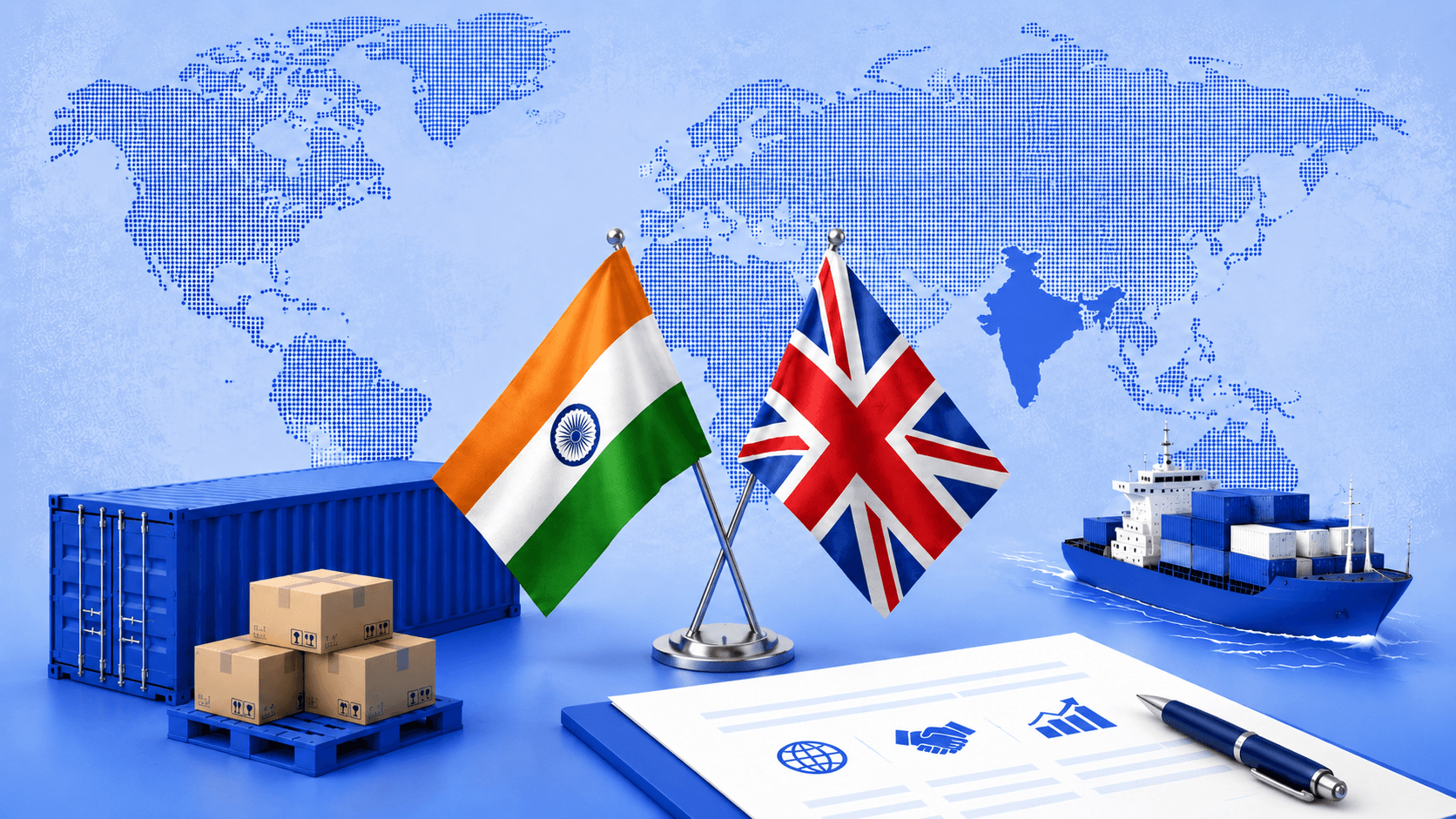
The India-UK Comprehensive Economic and Trade Agreement (CETA) could unlock an additional $1 billion of export opportunity for the domestic textile industry, according to a report by India Ratings and Research.
By eliminating the earlier 12% tariff on Indian textile sector, the agreement is expected to boost the landed cost competitiveness of Indian goods in the UK market. However, industry experts said sustained gains will depend on disciplined execution, capacity expansion, and compliance with regulatory standards.
India exported textile and apparel products worth $1.95 billion to the UK in 2025, with apparel accounting for 67%, or $1.31 billion, of shipments, followed by home textiles at $290 million and fabrics at $110 million.
The UK is India’s third-largest textile export destination, accounting for nearly 6.1% of India’s total textile exports. At the same time, imports of UK-origin textile products into India account for less than 1% of domestic consumption. India’s share of the UK textile import market is only about 6.9%, indicating significant headroom for growth.
The removal of the 12% tariff disadvantage is expected to help Indian exporters gain market share from Chinese suppliers over time. However, competing with Bangladesh may prove more challenging because of its lower production costs and larger manufacturing scale. According to the report, even a 3 percentage point increase in India’s share of the UK textile import market — from around 6.9% to 10% — could translate into an incremental export opportunity of nearly $900 million.
Further, regulatory compliance will be critical for exporters seeking to expand in the UK market, the report said. Exporters will need to meet evolving European and British standards on ethical sourcing rules, supply-chain traceability, ESG reporting, and Carbon Border Adjustment Mechanism (CBAM)-related norms. While larger manufacturers are better equipped to meet these standards, smaller exporters could face higher compliance costs.